


Downtown Wayfinding Signage
How Downtown Wayfinding Signage Improves Communities
Friday July 03, 2026Downtown Wayfinding Signage That Builds a Better Experience
A successful downtown should be easy to enter, easy to understand and easy to remember.
New pavement, landscaping, lighting and public amenities may improve the physical environment, but visitors still need to know where they are, where they are going and what is worth exploring along the way. That is the role of downtown wayfinding signage.
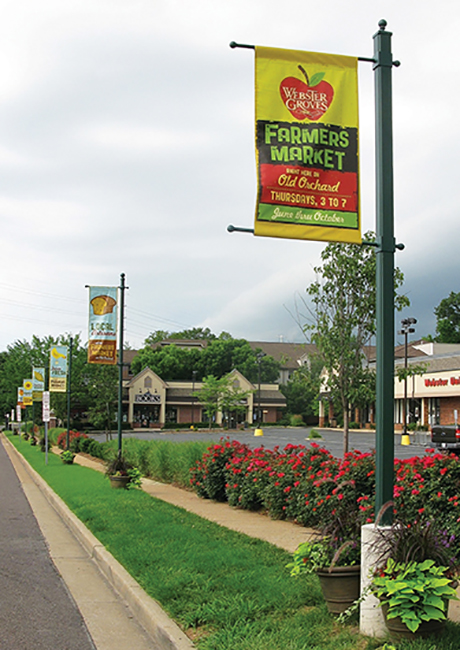
A coordinated signage system connects parking areas, civic buildings, local businesses, cultural destinations, public spaces and neighborhood gateways. It can also give a downtown district a recognizable visual identity rather than leaving visitors to navigate a scattered collection of unrelated signs.
For municipalities, redevelopment agencies, Main Street organizations and downtown development authorities, signage should therefore be treated as part of the streetscape infrastructure rather than a finishing touch added near the end of a revitalization project.
Start With a Downtown Signage and Wayfinding Plan
Individual signs work best when they belong to a larger system.
Before selecting sign styles or locations, communities should develop a signage and wayfinding plan that identifies the destinations people need to reach and the decisions they must make along the way.
That plan may include:
Major gateways and district entrances
Public and private parking areas
Pedestrian routes
Civic buildings
Parks and public gathering spaces
Historic landmarks
Museums and cultural attractions
Shopping and dining districts
Transit stops
Trail connections
Event venues
Accessible routes
A comprehensive plan helps prevent one of the most common downtown problems: signs being added individually over time without a consistent hierarchy, visual language or placement strategy.
The result of that piecemeal approach is usually more signage but less clarity.
Design Around Real Visitor Decisions
Effective wayfinding signs should appear before visitors become uncertain.
A motorist approaching a downtown district may need to know where to park. After parking, that same visitor becomes a pedestrian looking for a restaurant, park, courthouse, event venue or shopping street. Each stage creates a different information need.
A downtown wayfinding system should therefore account for several types of users:
Drivers entering the district
Drivers searching for parking
Pedestrians moving between destinations
Cyclists using trails or shared streets
Transit riders arriving at stops or stations
Visitors unfamiliar with the area
Residents who need clearer access to public facilities
Sign placement should follow these decision points rather than simply filling available space.
In Tampa Bay, for example, the information needs of a visitor entering Ybor City may differ from those of someone exploring Downtown Dunedin, Safety Harbor, Plant City or a waterfront district in St. Petersburg. The architecture, street pattern and attractions may change, but the underlying wayfinding principle remains the same: provide the right information before the user must guess.
Make Signs Easy to Read
Decorative streetscape signage still has to perform a practical job.
Typography, contrast, spacing and message length all affect whether a sign can be understood quickly. This is particularly important for vehicular signs, where drivers may have only a few seconds to read and respond.
Useful wayfinding practices include:
Choosing clear and legible typefaces
Maintaining strong contrast between text and background
Limiting each sign to essential information
Using predictable destination names
Incorporating familiar directional symbols
Keeping arrows and text aligned consistently
Avoiding overly small lettering
Positioning signs where landscaping, parked vehicles and street furniture will not block them
Accessibility should also be considered throughout the system. Depending on the application, this can include appropriate mounting heights, accessible routes, tactile elements, contrast requirements and compliance with applicable ADA standards.
The decorative character of a sign should support readability, not overpower it.
Create a Consistent Downtown Identity
Downtown signage is one of the most visible expressions of community identity.
A coordinated system can carry recurring elements such as:
Community colors
Logos or district marks
Consistent typography
Decorative finials
Ornamental sign posts
Coordinated bases and brackets
Repeated materials and finishes
Historic or architectural motifs
That consistency helps visitors recognize that gateway signs, parking signs, pedestrian wayfinding signs and business directories all belong to the same district.
It also allows different sign types to perform different functions without looking unrelated.
A gateway sign may be large and architectural. A pedestrian directional sign may be compact and information-dense. A business directory kiosk may require more display area. They do not need to be identical, but they should speak the same visual language.
Coordinate Signage With the Rest of the Streetscape
The strongest downtown revitalization projects coordinate signage with the surrounding public environment.
Wayfinding signs, decorative street signs, lighting, benches, planters, trash receptacles, message boards and other site furnishings should feel like parts of one streetscape rather than products selected from separate catalogues at separate times.
That does not mean every element must match perfectly. It means finishes, proportions, forms and colors should be considered together.
For example, a historic downtown may call for ornamental street sign posts, traditional lighting and restrained finishes. A contemporary mixed-use district may use cleaner lines, simplified typography and modern materials. A waterfront district may need finishes chosen specifically for moisture, salt exposure and intense sunlight.
The goal is not decoration for its own sake. It is a coherent public environment.
Use Gateway Signage to Establish a Sense of Arrival
A gateway sign tells visitors that they have entered a distinct place.
It may mark:
A downtown boundary
A historic district
A commercial corridor
A waterfront area
A civic campus
A redevelopment district
A neighborhood center
A municipal entrance
Gateway signage can combine community branding with practical orientation. It may also become a visual landmark that residents associate with the identity of the district.
In a larger city such as Tampa, gateways can help distinguish individual districts and corridors. In smaller municipalities such as Dunedin, Safety Harbor or Tarpon Springs, they can reinforce the identity of the downtown as a destination in its own right.
The scale, materials and placement of a gateway feature should reflect the environment around it. A sign designed for a high-speed road entrance will require different proportions and visibility than one intended for a pedestrian-oriented district.
Help Visitors Find Local Businesses
Wayfinding signage can support local economic development by making more of the downtown visible and accessible.
Visitors naturally gravitate toward the destinations they can find most easily. When parking areas, side streets, shopping corridors and public attractions are poorly identified, businesses outside the primary line of sight may receive less foot traffic.
Communities can improve that connection with:
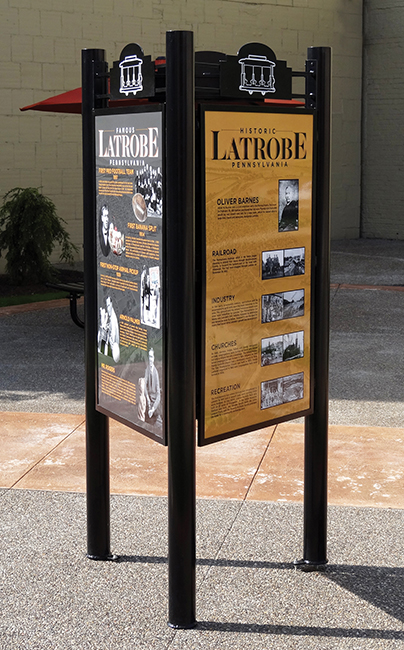
Business directory kiosks
Pedestrian maps
Parking-to-shopping routes
Directional signs to dining and retail areas
Event signage
Public message boards
District maps
Trail and sidewalk markers
Visitor information displays
The objective is not to cover every sign with individual business names. That quickly becomes difficult to maintain and visually overwhelming.
Instead, the signage system should help visitors understand the structure of the district and move confidently between commercial areas.
Plan for Change Without Rebuilding the Whole System
Downtowns change.
Businesses open and close. Parking arrangements shift. New public facilities are developed. Streets are redesigned. District boundaries expand. Event venues and attractions change names.
A useful signage system should make those updates manageable.
Modular panels, replaceable directory inserts and standardized sign components can allow information to be changed without replacing the entire sign structure.
Communities should establish procedures for:
Approving content changes
Updating maps and directories
Replacing damaged panels
Removing outdated destinations
Adding new public attractions
Maintaining consistent terminology
This is especially important for business directory signs and informational kiosks, where the content may change more frequently than the supporting structure.
Select Materials for the Local Environment
A downtown sign is not experienced only on installation day.
It must continue to look professional after years of exposure to sunlight, rain, wind, humidity, landscaping equipment, vehicle exhaust and normal public use.
In Florida and throughout the Tampa Bay region, signage materials and finishes should be selected with heat, intense ultraviolet exposure, heavy rain, humidity and coastal conditions in mind.
Planning for durability may involve:
Corrosion-resistant components
Appropriate powder-coated finishes
UV-resistant graphics
Replaceable sign panels
Tamper-resistant hardware
Drainage considerations
Foundations designed for site conditions
Materials suited to coastal or high-moisture environments
A lower initial price does not always produce the lowest long-term cost. Premature fading, corrosion or structural deterioration can make an inexpensive sign system costly to maintain.
Combine Physical Signage With Digital Tools
Digital tools can expand a downtown wayfinding system, but they should not be expected to replace physical signs.
Useful additions may include:
QR codes linking to district maps
Mobile-friendly visitor guides
Event calendars
Interactive directory kiosks
Accessible digital route information
Real-time parking information
Smart city applications
These tools can provide depth and frequently updated information. Physical wayfinding signs, however, remain essential because visitors may have limited connectivity, low battery power, accessibility needs or no reason to know that a digital resource exists.
The physical system should work independently. Digital tools should make it more useful.
Involve the People Who Use the Downtown
Downtown signage projects affect more than the municipal department responsible for purchasing the signs.
Useful input may come from:
Local business owners
Residents
Property owners
Tourism organizations
Accessibility advocates
Police and fire departments
Public works teams
Parking authorities
Historic preservation groups
Landscape architects
Community redevelopment agencies
Event organizers
Stakeholder input can reveal confusing intersections, hidden parking areas, frequently requested destinations and accessibility concerns that may not be obvious from a map.
Public involvement also helps communities distinguish between personal preferences and practical wayfinding needs.
Think Beyond the Individual Sign
The most effective downtown signage systems do more than point left or right.
They establish a visual hierarchy, clarify routes, identify destinations and reinforce the character of the community. When signage is coordinated with lighting, landscaping, street furniture and other public improvements, it helps turn a collection of streets into a recognizable destination.
Forsite works with municipalities, developers, planners, property managers and community organizations to create coordinated streetscape elements, including:
Wayfinding signage
Decorative street signs
Gateway features
Directional signage
Sign posts and mounting systems
Community identification elements
The objective is not simply to place more signs. It is to create a durable, understandable and visually cohesive system that serves the community for years.
Planning a Downtown Wayfinding or Streetscape Project?
Forsite can help your team coordinate wayfinding signage, decorative street signs, gateway features and complementary streetscape elements around the character and practical needs of your community.
Contact Forsite to discuss your downtown revitalization, municipal signage or community wayfinding project.
