


Decorative Street Sign Posts for Streetscapes and Community Design
Decorative Street Sign Posts for Neighborhoods, Developments, and Public Spaces
Decorative street sign posts do more than hold a sign in the air and hope for literacy. They help shape the visual character of a street, reinforce the identity of a neighborhood or development, and turn a basic traffic or wayfinding element into part of the broader design language of a property or community. For residential neighborhoods, municipalities, planned developments, mixed use sites, campuses, and commercial environments, decorative street sign posts can help create a more coordinated and intentional outdoor appearance while still serving an essential functional role.
In many settings, the difference between a plain utility post and a decorative street sign post is not just style for style’s sake. It is about how the streetscape feels as a whole. Decorative posts can complement surrounding architecture, entry features, lighting, site furnishings, landscaping, and signage systems so that the street environment feels unified instead of patched together from unrelated parts. That matters in communities and developments where visual cohesion helps create a stronger sense of place and a more memorable first impression.
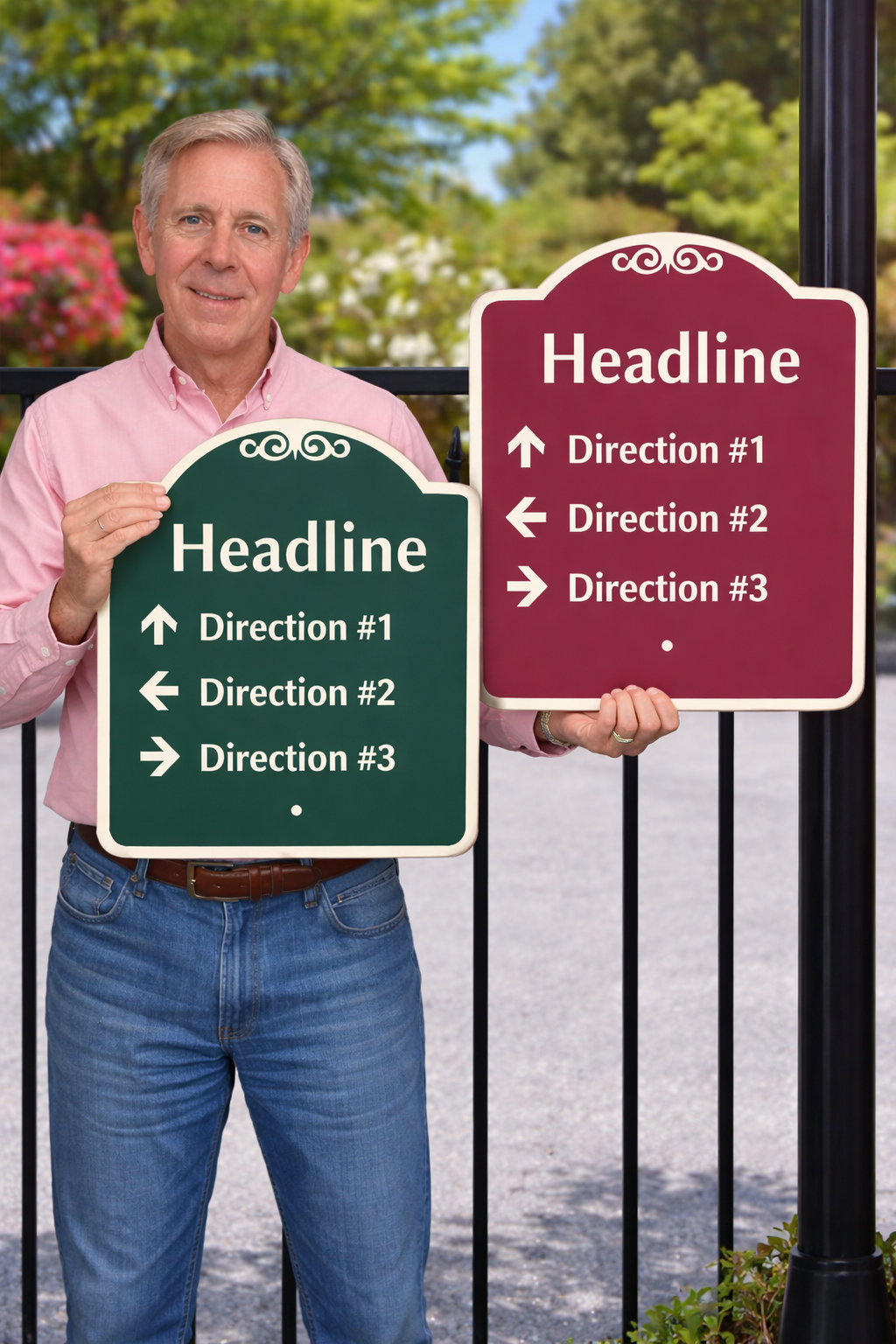
Decorative Street Sign Posts
Decorative street sign posts are often used in homeowner associations, residential subdivisions, multifamily communities, downtown districts, campuses, and municipal streetscape projects where both visibility and appearance matter. They can support street identification, improve site organization, and contribute to a more refined look at intersections, entrances, internal roads, and community wayfinding points. In environments where branding, aesthetics, and navigation overlap, the street sign post quietly ends up doing more image work than it ever asked for.
These posts can also help support consistency across a larger development or public-facing site. When decorative street sign posts are coordinated with monument signs, neighborhood signs, mailbox systems, lighting, and other site elements, they help the property look more established and thoughtfully designed. That kind of consistency can influence how residents, visitors, customers, and stakeholders experience the environment. It is not merely a post. It is one of those humble details that either strengthens the whole setting or drags it down into accidental ugliness.
For communities and properties that want street signage to do more than meet a minimum functional requirement, decorative street sign posts offer a practical and visually stronger solution. They help combine identification, durability, and aesthetic value in a form that supports both navigation and place-making. Whether the goal is to elevate a neighborhood streetscape, strengthen community identity, improve wayfinding, or create a more polished public environment, decorative street sign posts help the street itself look like someone was paying attention.
Frequently Asked Questions
Q: What are decorative street sign posts
A: Decorative street sign posts are sign support structures designed to hold street name signs while also contributing to the visual style and overall appearance of a neighborhood, property, or streetscape.
Q: Where are decorative street sign posts commonly used
A: They are commonly used in residential communities, municipalities, campuses, mixed use developments, commercial properties, and streetscape improvement projects.
Q: Why choose decorative street sign posts
A: Decorative street sign posts can improve visual cohesion, support community identity, enhance curb appeal, and create a more polished look for street signage.
Q: What can decorative street sign posts help with
A: Decorative street sign posts can help with street name visibility, site organization, wayfinding, streetscape design, and the overall appearance of outdoor environments.
Glossary
Decorative street sign post
A sign post designed to support street name signage while also matching the architectural or visual character of a property, neighborhood, or public space.
Streetscape
The collection of visible outdoor elements that shape the appearance and experience of a street or shared environment, including signs, lighting, furnishings, and landscaping.
Wayfinding
The use of signs and visual cues to help people navigate through a property, neighborhood, campus, or larger site.
Community identity
The distinct visual and symbolic character that helps a neighborhood, development, or district feel recognizable and unified.
GET IN TOUCH
Have questions or need pricing? We specialize in helping entire communities achieve a beautiful and unified aesthetic theme throughout.
Contact Us