


Wayfinding Signs
Wayfinding Signs That Make Properties Easier To Navigate
Wayfinding signs are not just about arrows. They are about reducing friction across the entire property. A good wayfinding system helps residents, guests, delivery drivers, vendors, and first-time visitors get where they need to go without slowing down traffic, stopping at every intersection, or calling the office for directions.
Most wayfinding sign projects start when a property has outgrown its original layout or signage. The signs may be inconsistent, hard to read, placed too late, or missing entirely. In some cases, the property has expanded over time and the old signs no longer reflect how people actually move through the space. In others, the site works for longtime residents but confuses everyone else. A strong wayfinding system fixes that by creating clear sign hierarchy, consistent naming, and placement that supports real movement patterns.
GET IN TOUCH
Have questions or need pricing? We specialize in helping entire communities achieve a beautiful and unified aesthetic theme throughout.
Contact Us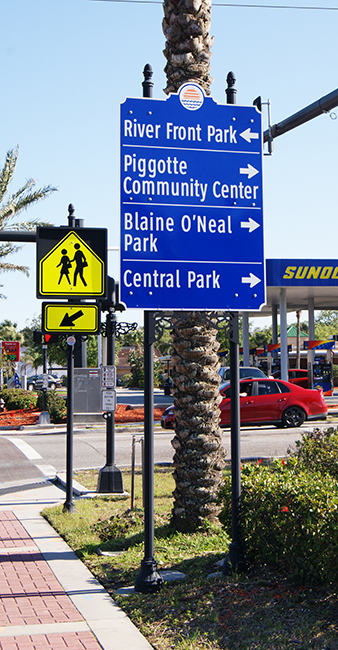
For HOAs, campuses, apartments, office parks, and mixed-use developments, wayfinding signage works best when it is treated as a system rather than a set of individual signs. The right approach usually includes entrance identification, directional signs, building markers, parking guidance, and destination markers that all use the same design language. When the pieces work together, the property feels easier to navigate and more professionally managed.
A good wayfinding plan also improves day-to-day operations. Fewer missed turns means less frustration for visitors and fewer interruptions for staff. Clear directional signage can help with deliveries, service calls, event traffic, and emergency access. It can also improve the overall impression of the property by making the site feel organized and intentional instead of patched together over time.
How to Build a Wayfinding Sign System That Actually Works
The best wayfinding signs are clear before they are clever. The goal is not to decorate the property with labels. The goal is to guide people through decisions at the right moment, using language, placement, and visibility that make sense from a moving car or on foot.
A reliable wayfinding system usually starts with a few practical decisions. First, identify the destinations that matter most, such as leasing offices, clubhouses, building numbers, visitor parking, amenities, loading areas, or campus buildings. Next, establish a sign hierarchy so the largest decisions are handled first and smaller decisions are handled closer to the destination. Finally, make sure the system stays visually consistent so people can recognize the signs quickly as they move through the property.
Properties often run into trouble when signs are designed one at a time. One sign gets installed for a new building. Another gets added for parking. Another gets replaced after storm damage. Over time, the result is a mix of colors, fonts, sizes, and message styles that forces people to re-learn the sign language every time they turn a corner. A coordinated system prevents that drift and makes future additions easier.
What to Consider Before Ordering Wayfinding Signs
Before choosing materials or layouts, it helps to think through how the property is used in real life. The same sign that looks fine on a design proof may fail outdoors if it is undersized, poorly placed, or competing with landscaping, parked vehicles, or low light conditions.
Here are the most important planning factors for most wayfinding sign projects:
-
Traffic type and speed: Signs for drivers need different size, placement, and wording than signs for pedestrians.
-
Decision points: The sign should appear before the turn, not after it.
-
Naming consistency: Buildings, amenities, and parking zones should be labeled the same way across the entire property.
-
Visibility conditions: Sun glare, shade, foliage, and nighttime lighting all affect legibility.
-
Durability: Outdoor wayfinding signs need materials and finishes that hold up in the local environment.
-
Future growth: A sign system should be easy to expand when buildings, amenities, or traffic patterns change.
If the property already has signs in place, a photo set or site map can help identify what should be kept, replaced, or standardized. In many cases, the best result is not starting over. It is tightening the existing system so it becomes easier to read and easier to maintain.
Common Wayfinding Sign Applications
Wayfinding signs are used anywhere people need help moving through a shared property. Common applications include apartment communities, HOA neighborhoods, business parks, hospitals, schools, universities, municipal facilities, churches, industrial campuses, and mixed-use developments with both residential and commercial traffic.
Within those environments, wayfinding signage can include entry directional signs, internal directional signs, parking and visitor signs, building number signs, amenity markers, trail or pedestrian direction signs, and map-based signs for larger sites. Some properties also need branded wayfinding systems that coordinate colors, typography, and materials with monument signs or community identity signage.
FAQ
Q: What are wayfinding signs used for?
A: Wayfinding signs are used to guide people through a property by providing clear directions, location markers, and destination cues. They help visitors, residents, and drivers move through the site more easily and reduce confusion.
Q: What is the difference between wayfinding signs and monument signs?
A: Monument signs usually identify a property or entrance. Wayfinding signs guide movement inside the property. Many sites use both, with monument signs at entry points and wayfinding signs throughout the interior roadways or walkways.
Q: Do wayfinding signs need to match existing property signage?
A: Yes, when possible. Matching colors, fonts, and materials helps the property feel consistent and makes the sign system easier to recognize quickly.
Q: Can wayfinding signs be designed for HOAs and residential communities?
A: Yes. HOA wayfinding signs are common for neighborhood entrances, visitor parking, amenity directions, building numbers, and internal street guidance.
Q: How do I know where wayfinding signs should be placed?
A: Placement usually follows decision points, entrances, intersections, and destination zones. A simple site review or map can help identify where signs should go so people see them before they need to choose a direction.
Q: Can wayfinding signs be updated over time?
A: Yes. A good wayfinding system is designed so panels or messages can be updated as the property changes without replacing every sign.
Glossary
Wayfinding sign: A sign used to guide people through a property using directions, labels, symbols, or destination markers.
Glossary: Sign hierarchy: The structured order of sign types, where primary signs handle major navigation decisions and secondary signs guide people to specific destinations.
Glossary: Decision point: A location where a person must choose a direction, such as an entrance, intersection, fork, or building split.
Glossary: Destination marker: A sign that confirms arrival at a location, such as a building number, office, amenity, or parking area.
Glossary: Legibility: How easily a sign can be read based on font size, contrast, spacing, lighting, and viewing distance.
A strong wayfinding sign system makes a property feel easier to use from the first visit. If you share a site map, sign list, or photos of the current layout, we can help recommend a wayfinding signage approach that improves navigation, fits the property’s look, and stays consistent as the site evolves.