


Neighborhood Entrance Signs for Community Identity and Arrival Appeal
Neighborhood Entrance Signs for Residential Communities and Property Entrances
Neighborhood entrance signs do more than tell people they have arrived somewhere. They help shape the first impression of a community, establish a stronger sense of place, and give the entrance a visual identity that feels intentional rather than improvised. For residential communities, subdivisions, homeowner associations, planned developments, and private neighborhoods, the entrance sign is often one of the most visible and memorable features on the property. It serves as a landmark, a reference point, and a public-facing signal that the neighborhood has a character of its own.
A well designed neighborhood entrance sign can improve both appearance and function. It helps identify the community clearly, supports visibility from the road, and creates a more defined point of arrival for residents, guests, service providers, and prospective buyers. When paired with landscaping, lighting, monument features, decorative posts, or surrounding streetscape elements, the sign becomes part of a broader entrance experience rather than a lonely object dropped by the roadside and left to explain itself.
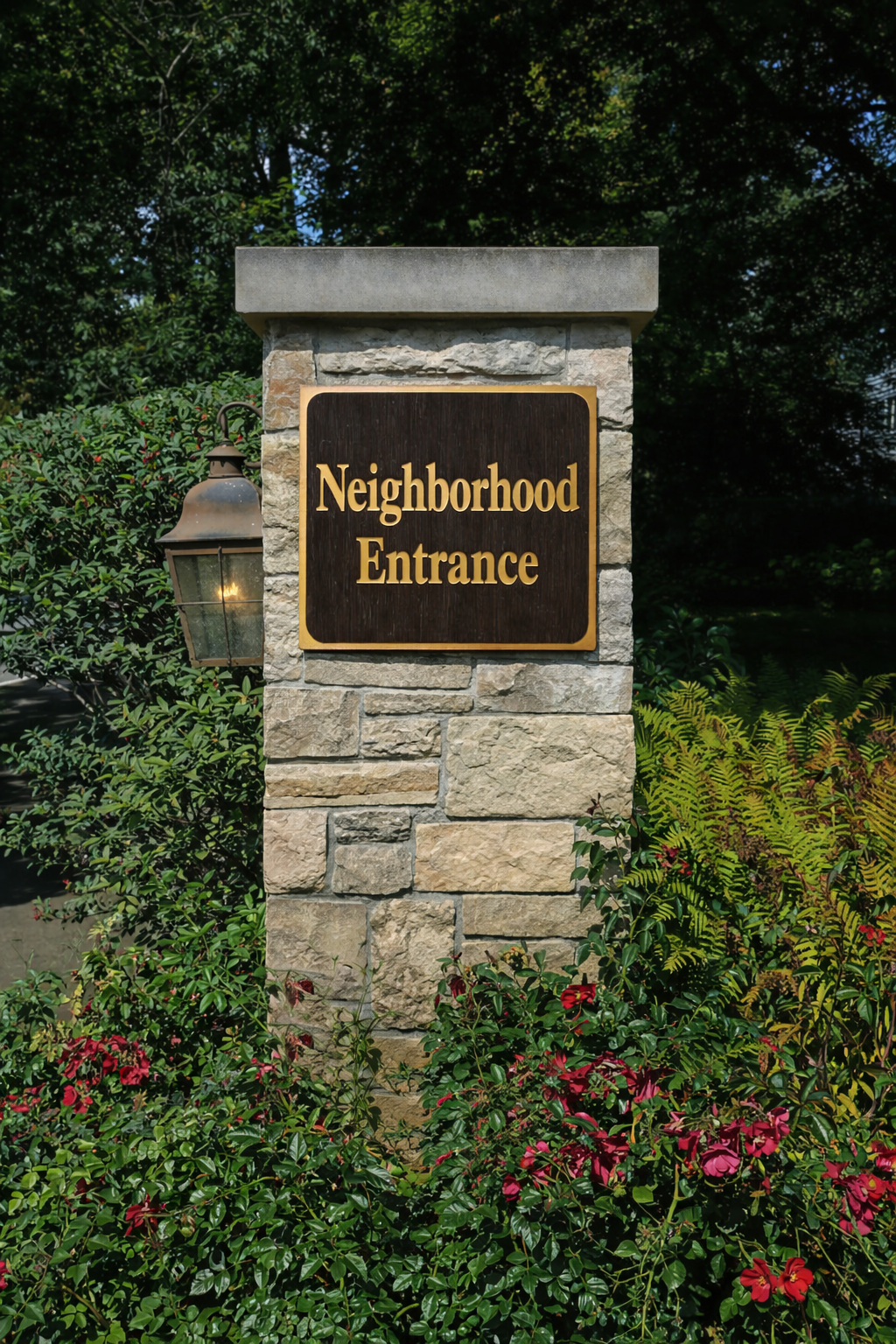
Neighborhood Entrance Signs
Neighborhood entrance signs are commonly used at primary community entrances, secondary access points, gated neighborhoods, private roads, and shared residential developments where community presentation matters. In many settings, these signs help reinforce identity while also contributing to curb appeal and orientation. They can provide a clearer visual marker for visitors and deliveries, and they help a development feel more established and more coherent from the very first turn off the road. That may sound decorative, but first impressions do a shocking amount of unpaid labor.
These signs can also support broader design and branding goals across a neighborhood. A community may want entrance signage that aligns with architectural style, mailbox systems, lighting, streetscape features, amenity signage, or other visible site elements so the environment feels cohesive. That consistency can make the property look more polished, more valuable, and more thoughtfully maintained. It is one of those details that quietly influences how people experience a place, right up until somebody installs something ugly enough to break the spell.
For residential communities and developments that want to strengthen arrival, visibility, and neighborhood identity, neighborhood entrance signs offer a practical and highly visible solution. They help improve first impressions, support wayfinding, reinforce branding, and contribute to a more refined exterior environment. Whether the goal is to refresh an aging entrance, improve community presentation, or create a more memorable sense of arrival, neighborhood entrance signs help the property announce itself with more clarity, confidence, and visual coherence.
Frequently Asked Questions
Q: What are neighborhood entrance signs
A: Neighborhood entrance signs are signs placed at the entrances of residential communities, subdivisions, and private neighborhoods to identify the area and support visibility, appearance, and community identity.
Q: Where are neighborhood entrance signs commonly installed
A: They are commonly installed at primary entrances, secondary entrances, gated neighborhoods, private roads, residential developments, and other visible community arrival points.
Q: Why are neighborhood entrance signs important
A: Neighborhood entrance signs improve first impressions, strengthen community identity, support visibility, and help neighborhoods feel more established and cohesive.
Q: What can neighborhood entrance signs help with
A: Neighborhood entrance signs can help with community identification, entrance visibility, curb appeal, wayfinding, and neighborhood branding.
Glossary
Neighborhood entrance sign
A sign installed at the entrance of a residential community or development to identify the neighborhood and create a stronger sense of arrival.
Community identity
The recognizable visual character and presence a neighborhood communicates through signage, landscaping, architecture, and site design.
Monument sign
A low profile ground sign often used at entrances to provide visibility and a more substantial architectural presence.
Wayfinding
The use of signs and visual cues to help people navigate to and through a property or community.
GET IN TOUCH
Have questions or need pricing? We specialize in helping entire communities achieve a beautiful and unified aesthetic theme throughout.
Contact Us