


City Welcome Sign
Custom City Welcome Signs for Municipal Entrances and Community Identity
A city welcome sign is often the first visible marker of a place. It introduces a town, municipality, district, campus, neighborhood, or planned community before visitors ever reach a main street, clubhouse, leasing office, civic building, or public destination. A well-designed welcome sign helps create recognition, improves arrival experience, and gives the entrance a more finished and intentional appearance.
City welcome signs may be used at municipal gateways, downtown entrances, public parks, residential developments, HOA communities, commercial districts, campus settings, and mixed-use properties. The right sign can help reinforce local identity while also supporting wayfinding, placemaking, and streetscape design.
Forsite works with municipalities, developers, HOAs, property managers, campuses, and planned communities to create custom outdoor sign solutions that fit the location, audience, and surrounding environment. A city welcome sign can be simple and traditional, decorative and architectural, or part of a larger coordinated sign system that includes street signs, wayfinding signs, entrance signs, community message boards, mailboxes, posts, brackets, and other outdoor elements.
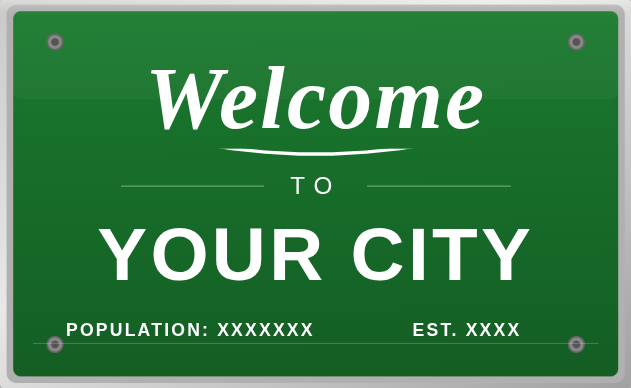
City Welcome Sign
Materials and construction matter because welcome signs are exposed to weather, traffic, landscaping, maintenance crews, sunlight, and everyday public visibility. Depending on the project, city welcome signs may include aluminum, cast aluminum, routed panels, dimensional lettering, powder-coated metal, masonry bases, decorative posts, brackets, lighting, or other durable outdoor components.
Forsite supports projects across the United States, including growing regions such as the greater Tampa Bay area, where municipalities, HOA neighborhoods, college campuses, planned communities, and commercial districts often need coordinated signs, mailboxes, wayfinding, and streetscape elements. For cities and towns around Tampa and other fast-growing markets, welcome signs can help organize public spaces while giving communities a stronger and more recognizable identity.
A city welcome sign may be designed as a standalone gateway marker or as one piece of a broader exterior sign package. For example, a municipality may need welcome signs at major roads, directional signs for parks and facilities, decorative street signs for downtown areas, and message boards for public notices. A residential developer may need entrance signs, street signs, mailbox systems, and wayfinding signs that all feel consistent across the property.
Design choices should reflect the site and the purpose of the sign. A small town may want a welcoming, traditional sign with classic lettering and decorative posts. A growing city may need a more substantial monument sign at a high-traffic entrance. A planned community may want a polished entrance sign that coordinates with HOA mailboxes, community street signs, and neighborhood wayfinding.
The goal is to create a city welcome sign that looks appropriate, lasts outdoors, and supports the identity of the place it represents. Whether the project involves a municipal gateway, a community entrance, a campus district, or a planned development, Forsite can help provide a durable custom sign solution that fits the setting and supports long-term use.
FAQs
What is a city welcome sign?
A city welcome sign is an outdoor sign used to identify a city, town, municipality, district, campus, community, or development at an entrance or gateway location. It helps create a clear first impression and reinforces the identity of the place.
Where are city welcome signs commonly installed?
City welcome signs are commonly installed at municipal entrances, downtown gateways, public parks, road entrances, planned communities, HOA neighborhoods, campus districts, commercial developments, and other high-visibility arrival points.
What materials are used for city welcome signs?
City welcome signs may use materials such as aluminum, cast aluminum, routed panels, dimensional lettering, powder-coated metal, HDU, PVC, masonry, stone, brick, stucco, decorative posts, brackets, and outdoor-rated finishes.
Can a city welcome sign include lighting?
Yes. City welcome signs can often include lighting depending on the design, location, budget, electrical access, and local code requirements. Lighting may improve visibility and help the sign stand out at night.
Can welcome signs be coordinated with street signs and wayfinding signs?
Yes. City welcome signs can be coordinated with decorative street signs, wayfinding signs, community message boards, entrance signs, mailbox systems, posts, brackets, and other streetscape elements to create a consistent look across a property or municipality.
Do city welcome signs require permits?
Some city welcome signs may require permits depending on local regulations, sign size, height, lighting, placement, structure, and installation method. Requirements vary by municipality, county, property type, and project location.
Are city welcome signs only for municipalities?
No. Although municipalities often use city welcome signs, similar signs are also used by planned communities, HOAs, campus districts, commercial developments, public parks, residential neighborhoods, and mixed-use properties.
Can Forsite help with welcome signs for communities around Tampa?
Yes. Forsite works with municipalities, HOAs, developers, property managers, campuses, and planned communities across the United States, including growing regions such as the greater Tampa Bay area.
Glossary
City Welcome Sign: An outdoor sign used to identify a city, town, municipality, district, community, campus, or development at an entrance or gateway location.
Municipal Sign: A sign used by a city, town, borough, township, county, or other public entity for identification, wayfinding, public information, or placemaking.
Gateway Sign: A sign placed at a major entrance to a city, town, neighborhood, development, campus, or district.
Community Entrance Sign: A sign used at the entrance of a residential community, HOA neighborhood, apartment community, or planned development.
Monument Sign: A freestanding sign structure, often installed close to the ground, that may include masonry, stone, stucco, metal, or architectural elements.
Wayfinding Sign: A sign that helps visitors navigate streets, campuses, parks, municipal facilities, residential developments, and public spaces.
Dimensional Lettering: Raised letters or graphics mounted to a sign face or structure to create depth and visibility.
Cast Aluminum Sign: A durable outdoor sign made using cast aluminum, often chosen for decorative, architectural, municipal, and community applications.
Decorative Sign Post: A post used to support a sign while adding visual detail, architectural style, or streetscape consistency.
Powder-Coated Finish: A durable finish applied to metal components to help resist weather, wear, fading, and corrosion.
Placemaking: The use of design, signage, public spaces, and visual identity to create a stronger sense of place.
Streetscape: The visible outdoor environment along streets, roads, sidewalks, entrances, and public areas, including signs, lighting, posts, landscaping, mailboxes, and site furnishings.
GET IN TOUCH
Have questions or need pricing? We specialize in helping entire communities achieve a beautiful and unified aesthetic theme throughout.
Contact Us