


Way Finding Signs
Way Finding Signs for Clear Navigation and Property Direction
Way finding signs help people understand where they are, where they need to go, and how to move through a property without confusion. In communities, campuses, parks, apartment properties, commercial districts, municipalities, and planned developments, clear directional signage can make a site feel more organized, easier to use, and more professionally maintained.
For HOAs, developers, municipalities, property managers, campus planners, parks, and commercial properties, way finding signs are often part of the visitor experience. They can help identify entrances, amenities, parking areas, leasing offices, clubhouses, mail centers, trails, buildings, streets, facilities, public spaces, and pedestrian routes.
Way finding signs are different from simple identification signs because they help guide movement through a place. A sign may point visitors toward a clubhouse, direct residents to a mail center, guide drivers to visitor parking, identify a park trail, or help people move between buildings on a campus. Good way finding reduces uncertainty and makes the property easier to navigate.
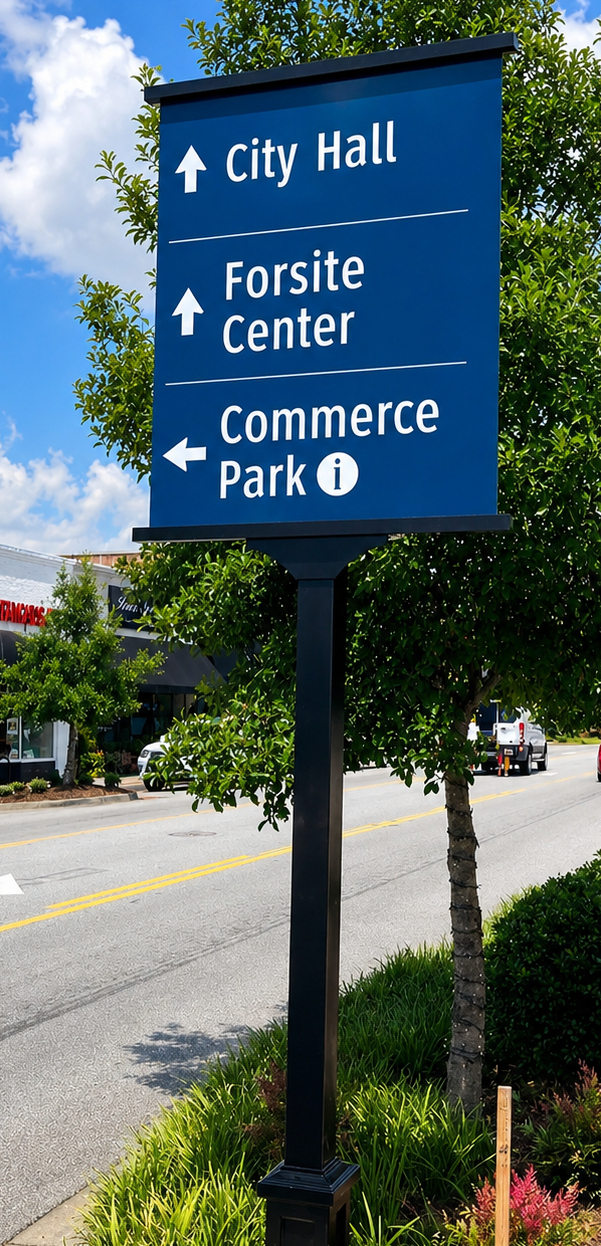
Way Finding Signs
Way finding signs may be used in HOA neighborhoods, apartment communities, townhome developments, municipal parks, downtown districts, schools, universities, mixed-use properties, healthcare campuses, business parks, and commercial sites. They can be installed at entrances, intersections, pedestrian paths, parking areas, facility entrances, amenity centers, and other decision points where visitors need direction.
Forsite works with HOAs, developers, municipalities, property managers, campuses, and planned communities across the United States, including growing regions such as the greater Tampa Bay area. In Tampa-area growth markets with master-planned communities, HOA neighborhoods, campuses, mixed-use districts, and amenity-rich developments, way finding signs can help residents and visitors move through larger properties with less confusion.
Design choices should reflect the property and the people using it. A residential community may need directional signs for entrances, clubhouses, pool areas, mail centers, trails, and visitor parking. A campus may need building, lot, pedestrian, and vehicle wayfinding. A municipality may need signs for parks, downtown areas, civic buildings, trails, and public facilities.
Materials and construction matter because way finding signs are used outdoors and need to remain readable over time. Depending on the project, signs may include aluminum panels, cast aluminum, routed panels, reflective materials, powder-coated posts, dimensional lettering, custom colors, brackets, maps, arrows, icons, or coordinated sign frames.
A good way finding sign system should be clear without being cluttered. The most useful signs usually combine simple language, readable typography, consistent placement, appropriate arrows, and a design style that fits the community or property. Too many signs can create visual noise, while too few signs can leave visitors guessing.
Way finding signs can also be coordinated with entrance signs, street signs, community message boards, mailbox areas, amenity signs, and other exterior elements. This helps the site feel unified rather than patched together from unrelated signs installed at different times.
The goal is to create way finding signs that are easy to read, durable, attractive, and useful in the places where people make navigation decisions. Whether the project involves a planned community, campus, apartment property, municipal park, business district, or HOA neighborhood, Forsite can help provide way finding sign solutions built for long-term outdoor use.
FAQs
What are way finding signs?
Way finding signs are signs that help people navigate a property, community, campus, park, district, or public space. They may identify directions, destinations, buildings, amenities, parking areas, entrances, trails, or pedestrian routes.
Where are way finding signs commonly used?
Way finding signs are commonly used in HOA communities, apartment properties, campuses, schools, universities, parks, municipal spaces, commercial districts, mixed-use developments, business parks, and planned communities.
How are way finding signs different from identification signs?
Identification signs usually name a location, while way finding signs help people move through a property. A way finding sign may point toward parking, a clubhouse, a mail center, a trail, an office, a building, or an amenity.
What information should be included on a way finding sign?
A way finding sign may include destination names, arrows, icons, building names, parking directions, amenity names, trail information, facility labels, or simple instructions. The best content depends on the site and the decisions visitors need to make.
Can way finding signs be customized for a community or campus?
Yes. Way finding signs can be customized with colors, typography, logos, materials, posts, brackets, arrows, icons, maps, and finishes that match the visual identity of a community, campus, district, or development.
Can way finding signs be used in HOA communities?
Yes. HOA communities often use way finding signs to direct residents and visitors to entrances, clubhouses, pools, mail centers, parks, trails, visitor parking, amenities, and neighborhood facilities.
What should be considered when planning way finding signs?
Important considerations include visitor flow, decision points, sign placement, readability, arrows, destinations, traffic patterns, pedestrian routes, lighting, materials, maintenance, and consistency with the property’s visual style.
Can Forsite help with way finding signs in the Tampa area?
Yes. Forsite works with HOAs, developers, municipalities, property managers, campuses, and planned communities nationwide, including growing regions such as the greater Tampa Bay area.
Glossary
Way Finding Sign: A sign that helps people navigate a property, community, campus, park, district, or public space.
Directional Sign: A sign that points people toward a destination such as parking, a building, clubhouse, trail, amenity, entrance, or public facility.
Decision Point: A location where visitors, residents, drivers, or pedestrians need direction to choose where to go next.
Pedestrian Wayfinding: A sign system designed to help people walking through a property, campus, park, district, or community.
Vehicle Wayfinding: A sign system designed to help drivers navigate roads, parking areas, entrances, exits, and destinations within a property.
Destination Sign: A sign that identifies or points toward a specific destination such as an office, building, park, amenity, mail center, or clubhouse.
Sign System: A coordinated group of signs designed to work together across a property, community, campus, or district.
Amenity Sign: A sign that identifies or directs people to amenities such as pools, clubhouses, parks, trails, fitness centers, mail centers, or gathering spaces.
Campus Wayfinding: A coordinated sign system used to guide students, visitors, staff, residents, or drivers through a school, university, business campus, or institutional property.
Map Sign: A sign that includes a site map, building layout, trail map, district map, or property overview to help people orient themselves.
Arrow Sign: A sign that uses arrows to direct people toward a destination or route.
Outdoor-Rated Sign: A sign designed with materials, finishes, and construction methods intended for exterior weather exposure.
GET IN TOUCH
Have questions or need pricing? We specialize in helping entire communities achieve a beautiful and unified aesthetic theme throughout.
Contact Us