


Neighborhood Entrance Signs Cost
What Affects Neighborhood Entrance Signs Cost?
Neighborhood entrance signs cost depends on the type of sign, the size of the project, the materials used, the level of customization, and the installation requirements at the site. A simple community entrance sign may have a very different budget than a large monument sign with masonry columns, decorative lighting, custom lettering, landscaping, and coordinated streetscape elements.
For HOAs, developers, property managers, municipalities, and residential communities, entrance signs are often one of the most visible investments in curb appeal and identity. They introduce the neighborhood, help visitors identify the community, and create a more polished first impression. Because the sign becomes part of the built environment, cost should be evaluated not only by the sign panel itself, but by the complete entrance sign system.
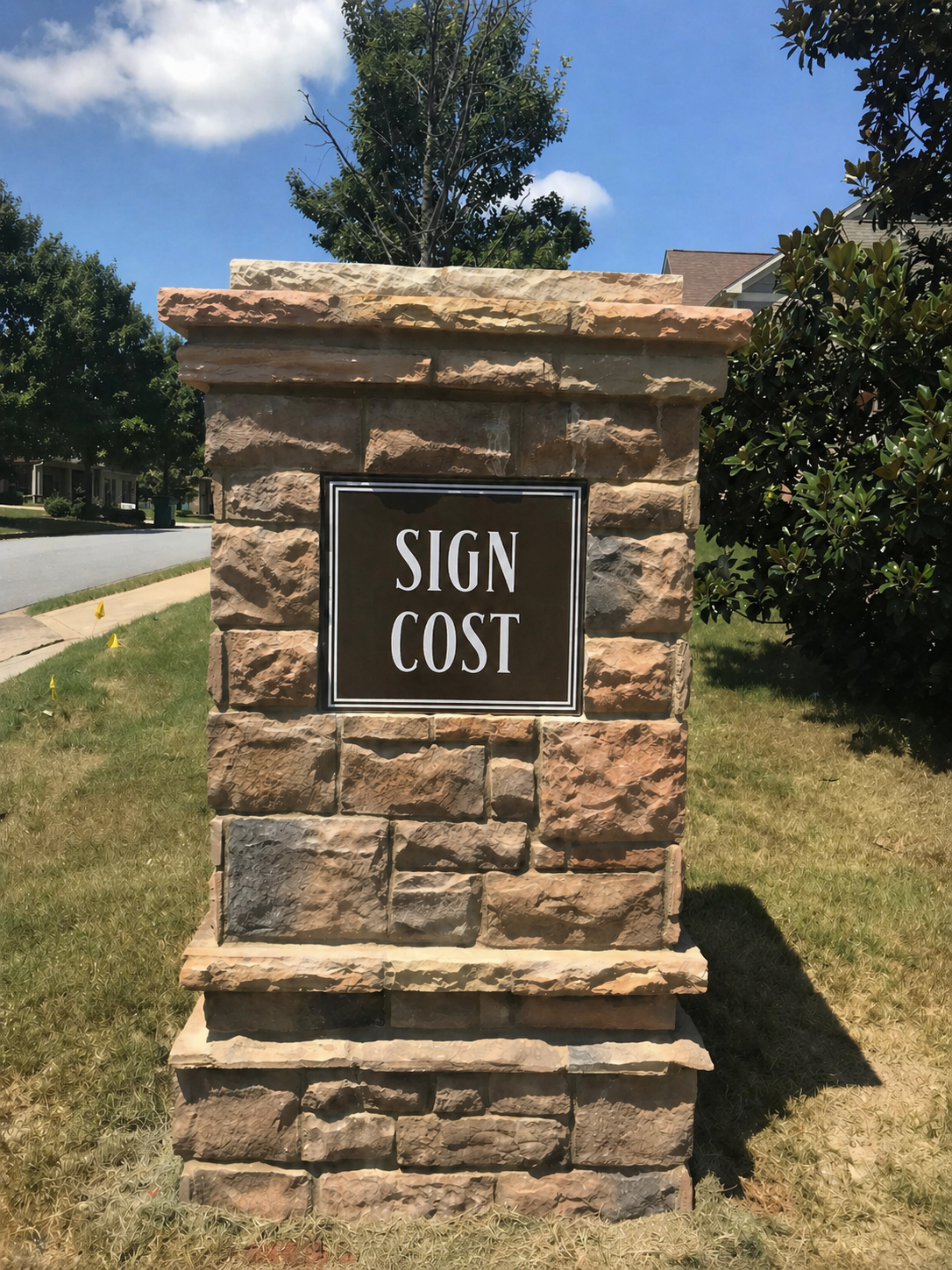
Neighborhood Entrance Signs Cost
Several factors can affect neighborhood entrance signs cost. These may include sign size, sign material, post or monument structure, decorative elements, custom fabrication, branding, colors, finishes, lighting, permits, engineering, foundation work, site preparation, and installation access. A replacement sign using an existing structure may cost less than a new entrance monument that requires excavation, footers, masonry, electrical work, or multiple trades.
Material selection also plays a major role. Neighborhood entrance signs may use routed panels, cast metal, aluminum, HDU, PVC, acrylic, stone, brick, stucco, wood-look materials, composite materials, or powder-coated metal components. More durable and customized materials may increase the upfront price, but they can also improve longevity, reduce maintenance, and create a stronger finished appearance.
Design complexity is another important cost factor. A basic sign with standard lettering and a simple frame will usually be more economical than a fully custom entrance sign with dimensional letters, decorative posts, monument bases, masonry, lighting, landscaping, and coordinated wayfinding or street sign elements. Communities that want a premium entrance often need to budget for both the sign and the surrounding visual environment.
Installation conditions can also influence the final cost. Factors such as soil conditions, slope, utilities, access, local code requirements, sign permitting, electrical needs, and the condition of any existing sign structure can affect the project scope. For this reason, accurate pricing usually requires understanding the site, the desired design, and the level of finish expected by the community.
Forsite works with HOAs, developers, property managers, builders, municipalities, and residential communities to provide neighborhood entrance sign solutions that fit the site, budget, and design goals. Whether the project involves a simple replacement sign, a refreshed community entrance, or a larger custom monument sign, the goal is to create an entrance that looks appropriate, lasts outdoors, and supports the identity of the neighborhood.
FAQs
Q: What affects neighborhood entrance signs cost?
A: Neighborhood entrance signs cost can be affected by sign size, materials, design complexity, custom lettering, posts, monument structures, lighting, masonry, site preparation, permits, engineering, installation access, and whether the project uses an existing structure or requires a new foundation.
Q: How much does a neighborhood entrance sign cost?
A: The cost of a neighborhood entrance sign varies widely depending on the scope of the project. A simple replacement sign may cost less than a custom monument sign with masonry, lighting, dimensional lettering, decorative posts, landscaping, and installation work. Accurate pricing usually requires reviewing the design and site conditions.
Q: Are custom neighborhood entrance signs more expensive?
A: Custom neighborhood entrance signs often cost more than basic signs because they may require design work, custom fabrication, special materials, dimensional lettering, decorative structures, finishes, lighting, and installation planning. However, customization can also create a stronger and more durable finished entrance.
Q: Does installation affect the cost of an entrance sign?
A: Yes. Installation can significantly affect neighborhood entrance signs cost. Site access, soil conditions, slope, utilities, foundations, electrical work, permitting, and the condition of existing structures can all influence the final price.
Q: Can an existing neighborhood entrance sign be replaced?
A: Yes. In many cases, an existing neighborhood entrance sign can be replaced or updated. If the existing structure is in good condition, replacing the sign panel or lettering may be more cost-effective than building a new monument or entrance feature from scratch.
Q: Do entrance signs require permits?
A: Some neighborhood entrance signs may require permits depending on local codes, sign size, location, lighting, height, and installation method. Permit requirements vary by municipality, county, development, and property type.
Q: What materials are used for neighborhood entrance signs?
A: Neighborhood entrance signs may use materials such as aluminum, HDU, PVC, acrylic, routed panels, cast metal, composite materials, brick, stone, stucco, wood-look materials, and powder-coated metal components. Material choice affects appearance, durability, maintenance, and cost.
Q: Can neighborhood entrance signs include lighting?
A: Yes. Neighborhood entrance signs can often include lighting, depending on the design, site conditions, budget, and electrical access. Lighting may improve visibility, enhance curb appeal, and make the entrance easier to identify at night.
Glossary
Neighborhood Entrance Sign: A sign placed at the entrance of a residential community, HOA, subdivision, or neighborhood to identify the property and create a finished first impression.
Community Entrance Sign: A general term for signage used at the entrance of a residential community, apartment community, development, or shared property.
Monument Sign: A freestanding sign structure, often built close to the ground, that may include masonry, stone, stucco, concrete, metal, or other durable materials.
Sign Panel: The main visible face of a sign that carries the name, logo, lettering, or design.
Dimensional Lettering: Raised letters or graphics mounted to a sign face or structure to create depth and a more premium appearance.
HDU Sign: A sign made from high-density urethane, a material often used for routed, carved, or dimensional outdoor signs.
Routed Sign: A sign created by cutting or carving letters, shapes, or graphics into the sign material.
Masonry Base: A brick, stone, block, or stucco structure used to support or frame an entrance sign.
Footer: A concrete foundation or footing used to support a freestanding sign, post, or monument structure.
Site Preparation: The work needed to prepare a location for sign installation, including clearing, grading, foundation work, utility coordination, or removal of old signage.
Sign Permit: A local approval that may be required before installing, replacing, lighting, or modifying an exterior sign.
Illuminated Entrance Sign: An entrance sign that includes lighting, such as external fixtures, internal lighting, landscape lighting, or other visibility features.
GET IN TOUCH
Have questions or need pricing? We specialize in helping entire communities achieve a beautiful and unified aesthetic theme throughout.
Contact Us